Journal

Author: Luong Tam

  • Euro Nymphing Rod Development

    Euro Nymphing Rod Development

    By late 2024, I finally began the first real experiments in euro nymphing rod development. It quickly became clear that a euro nymphing rod is not defined well by standard fly rod line weights. Nor is it defined by the romantic idea of long-line casting. Euro nymphing originated from European competition fly fishing. The focus is not on carrying a heavy fly line through the air. Instead, it is about maintaining contact and controlling the drift. It involves managing an extremely thin line and detecting subtle strikes. Additionally, it’s about fishing effectively in specific types of water. That realization became the true starting point for the Tanuki euro nymphing project. I was not interested in simply putting a euro nymphing label on a conventional fly rod. I wanted to build a rod around the actual logic of the method, from a tenkara rod maker’s perspective.

    Gianluca fishing with a Tanuki euro nymphing rod prototype on the Soča River in Slovenia.

    I received encouraging feedback from testers in Europe and the United States. Established rod companies also provided positive feedback. This gave me enough confidence to spend a week at the rod factory in Weihai refining the prototypes. After the Beijing Fishing Tackle Show, I took the 4.5-hour high-speed train instead of flying. I preferred the train because it was more relaxed, more spacious, and quieter than flying. It felt like the right transition between the noise of the trade show and the quiet concentration of development work. The ride gave me uninterrupted time. I think through the prototype goals. I also considered the direction the rods needed to go before arriving at the factory.

    high speed train in china

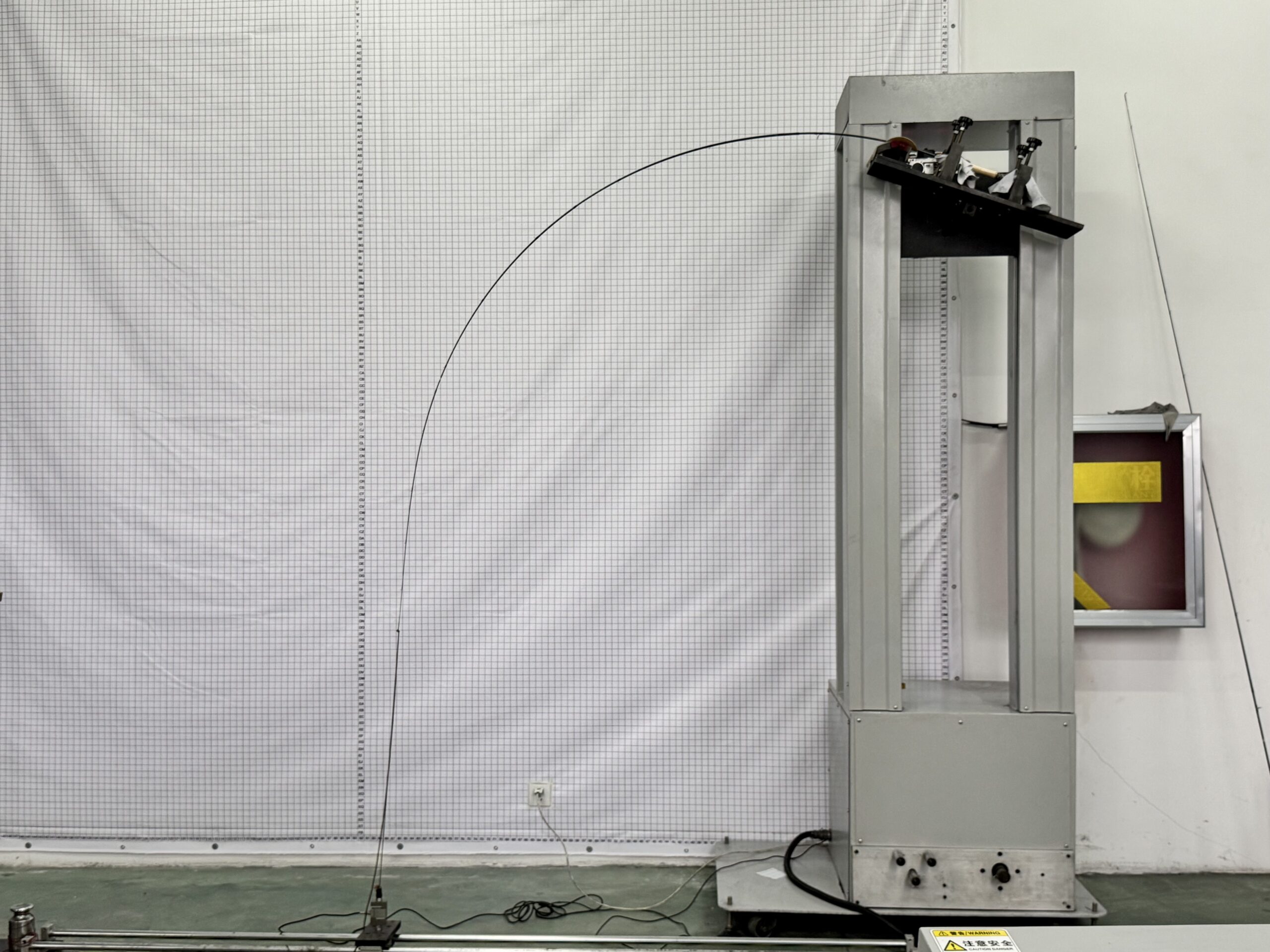
    Over the years, I had worked with the same factory to build a rod testing lab. Years ago, it began with hand testing, photos, and video. This gradually evolved into a more controlled and precise system for understanding rod behavior. I used a computer-controlled lifting system. With adjustable angles, I measured a rod’s response under load. I did this in 5-degree increments. I studied bending curves. I compared resistance at different points along the blank. That gave me a way to look beyond first impressions and subjective feel, and to compare prototypes with greater consistency.

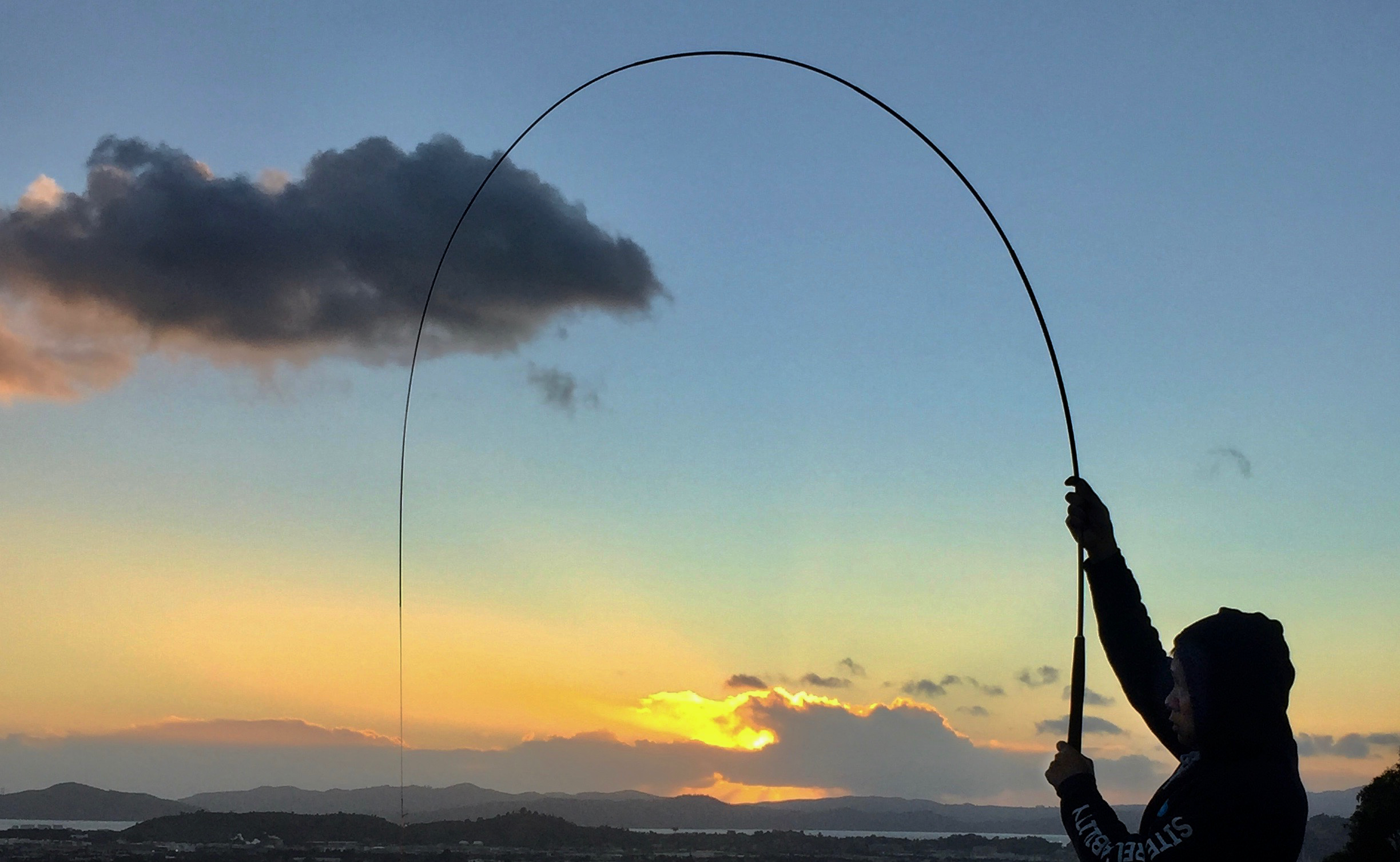
    The three angles that mattered most to me were horizontal lifting. Another critical angle was about 60 to 90 degrees for fighting fish. The last important angle ranged from 90 to 110 degrees for landing fish. Those positions show what really happens on the water. Testing in the lab helped me collect data on rod materials, tapers, and construction techniques. It also gave me a better way to predict how a prototype functions before going back to the water. I believe this data will become increasingly valuable. Rod design will become more informed by digital analysis and AI in the future. In the early days, every rod needed to be lifted by hand. Each one had to be tested individually, extending the time the process took. Looking back, that slower method taught me a lot. Yet, the lab now allows me to study rods with a level of consistency. The detail achievable was not possible before.

    A rod can feel good in the hand, but the real test is always on the water. It must protect light tippet and control fish in current. It should keep sensitivity and lift with confidence at the angles anglers actually use. For euro nymphing, that matters because the rod has to do more than cast efficiently. It must support a contact-driven system, manage pressure precisely, and carry out well under practical fishing conditions. The lab did not replace on-the-water testing. Still, it provided a clearer engineering reference. This helped in understanding what each prototype was actually doing.

    When I arrived at the factory, three different prototypes were already waiting for me to test. After each round, we turned around a revised prototype in about 24 hours. We worked every day from 8 a.m. until about 10 p.m. On the final evening, we stopped at midnight just to make sure the hot pot restaurant was still open.

    Largemouth, the first largemouth bass caught on a euro nymphing rod prototype at a lake in Denver, Pennsylvania.

    By the end of the week, I was tired, but I flew back to the U.S. with a prototype in hand and took it straight to the lake in Denver, Pennsylvania. The weather was cold and unsettled, with rain, hail, and snow through most of the morning. By the time the sky finally cleared, the wind was still blowing. The air still had that sharp late-winter bite. I would not wait any longer. After a few casts, the first fish was a largemouth bass, followed by ten good-sized rainbow trout. Later, I posted the photos in a Euro Nymphing group on Facebook. Most of the comments said the rod was meant for streams, not still water. My answer was simple: if the water does not move, I move the rod. The prototype handled it just fine.
  • My First Trip to the Beijing Fishing Tackle Export Show

    My First Trip to the Beijing Fishing Tackle Export Show

    This year, I made my first trip to the Beijing Fishing Tackle Export Show in Beijing, China. I went for a practical reason. I wanted to meet many of my suppliers in one place. I aimed to continue developing the euro-nymphing project without having to fly from factory to factory. Making that trip meant giving up something familiar. The show was on the same weekend as the Pleasanton Fly Fishing Show. I normally have a Tenkara Tanuki booth there. For the first time in years, I had to miss Pleasanton.

    I landed in Beijing and took the Airport Express into the city. The moment I stepped outside, the cold hit me hard. Beijing felt like the North Pole. It was 32°F, about 0°C. Then I arrived at the hotel, and the contrast was almost shocking. Inside felt like an oven, around 80°F, or 27°C. My room was so warm I had to turn off the thermostat. In one day, I felt like I had traveled between two seasons.

    Beijing subway, waiting arriving at an underground station in central Beijing, China.

    I checked in and then went back out. I took the subway to the convention center. I wanted to make sure I knew the route for the next morning. I have been to Beijing enough times that the subway system feels familiar to me now. That is why I chose a hotel in central Beijing. It is right next to a station. The hotel is about 50 minutes from the show. I had arrived a day early, thinking I will have time to explore the city after the event.

    But the trip had other plans for me.

    Each evening after the show, I found myself at dinner with vendors and guests from around the world. They were German, French, Egyptian, Italian, and Russian. We sat around large banquet tables, sharing dishes, stories, and conversations that moved easily from one language to another. I was the only person at the table who could not speak Chinese. That made me feel a little embarrassed. Still, there was something memorable about sitting there in Beijing. I was surrounded by people from so many countries. Everyone was connected in some way by fishing.

    Dinner at a Beijing banquet beginning with ice cream, followed by a sweet pear-shaped dessert

    One night we ate Peking duck, one of Beijing’s most famous dishes. I noticed something unique and charming. At these large banquets, dessert often came first.

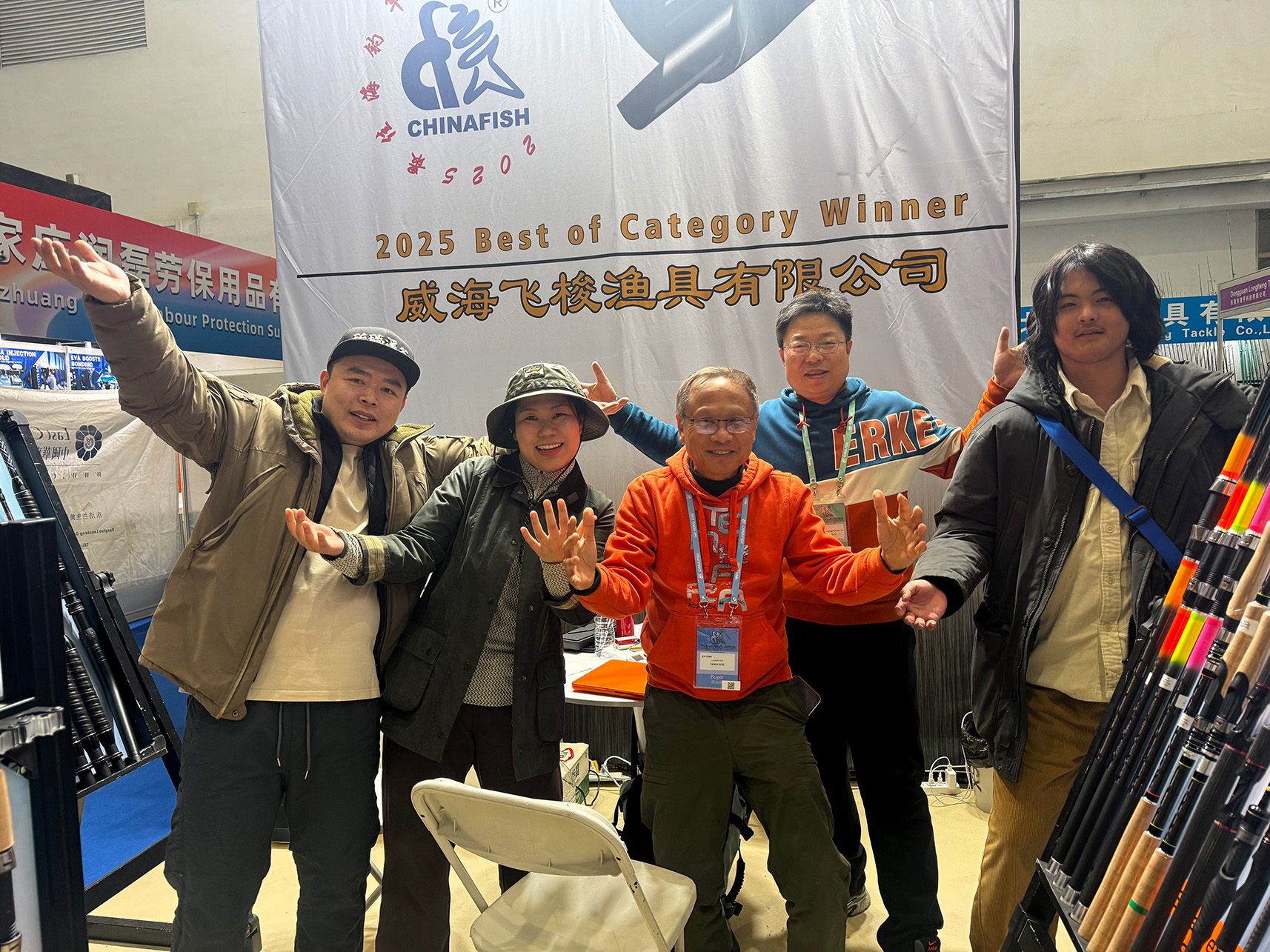
    The show itself was enormous—around 1,000 exhibitors spread across three giant halls, each about the size of two football fields. Yet among all that scale, only a small handful had anything to do with fly fishing. That made those booths matter even more to me. Hidden inside a massive tackle industry show was the small corner I had come for.

    Euro-nymphing reel prototypes displayed at the Beijing Fishing Tackle Export Show during the Tanuki reel development process

    I spent most of my first day focused on Euro-nymphing reels and the second day working on fly lines. In between, I was often invited to cast new rods with staff from different fly-fishing factories. Those moments were more than casual fun. They reminded me that tackle design is not only done on paper, on screens, or in factory meetings. Sometimes it happens in quick conversations. It occurs in a few test casts. It materializes in the feeling of a rod loading and unloading in your hand.

    That was also where I ran into Miss 39. She is a social media influencer who was excited to join the Tanuki team as an ambassador. I also met a few local fly anglers, and we exchanged casting techniques and thoughts about fishing. Those small connections stayed with me. The trade show was huge and full of products, displays, and noise. Nevertheless, the human moments gave the trip its meaning.

    Miss 39 and her filming partner at the Beijing Fishing Tackle Export Show in Beijing, China.

    The reel project had already been moving for months before I arrived in Beijing. After I released my first Euro-nymphing rod prototype in August of last year, testers began asking for a matching reel. That simple request started a new path. I sent design requests to several reel factories in Ningbo. This city is known for reel manufacturing. Last December, I visited them to work out the specifications. Each factory developed a different style of reel. By the time I reached Beijing, I had already seen the first prototypes. The show gave me the chance to continue refining them in person. Meeting face to face is always better than trying to do everything through messages and shipped samples.

    On the last day of the show, I spent time with the Pac Bay team. We were working on custom guides for the Tanuki Euro-nymphing rod. I first met Tony, the new president of Pac Bay, two years ago. By that afternoon, the energy of the show was already beginning to drain away. Although the official closing time was 4:30 p.m., many exhibitors started packing up around noon. By about 2 p.m., half the hall was already empty. It felt like watching a temporary city quietly disappear.

    Fly rod booth at the Beijing Fishing Tackle Export Show in Beijing, China.

    When the show ended, I went back to the hotel exhausted. I finally needed a nap to catch up with the jet lag. When I woke up, it was already dark outside. It was time to look for food. I also needed to finish packing for the next leg of the journey to Weihai by high-speed train. Weihai is the center of fishing rod manufacturing in China. I thought I knew how to get to the high-speed train station. However, being too confident sometimes creates its own problems. What should have been a simple 50-minute trip to the station turned into an adventure of its own.

  • Tanuki 425 — Responsiveness and a Small Beginning

    Tanuki 425 — Responsiveness and a Small Beginning

    Designing a Long Tenkara Rod, Lessons from Oni School, and the Origins of the Tanuki 425

    During my research and development of my first tenkara rod, one suggestion kept appearing online. That suggestion was: “Get the longest rod you can.” At the time, that usually meant rods around 15 feet long—the longest one-hand casting tenkara rods available then.

    I tried one. It was heavy, and within five minutes of casting in the Japanese style, my wrist hurt. A little later, I realized that placing the index finger on top of the grip felt unnatural. Initially, I followed this style. More importantly, it wasn’t wabi. It didn’t feel calm, balanced, or honest.

    I was honestly surprised when the Tanuki 375 later received such overwhelmingly positive feedback. Anglers described it as light, sensitive, and responsive—and, importantly, not a me-too rod. To me, a me-too rod is an off-the-shelf OEM design with a new label. The Tanuki 375 wasn’t that, and people felt it immediately on the water.

    That response gave me confidence—and the motivation to explore other rod lengths.

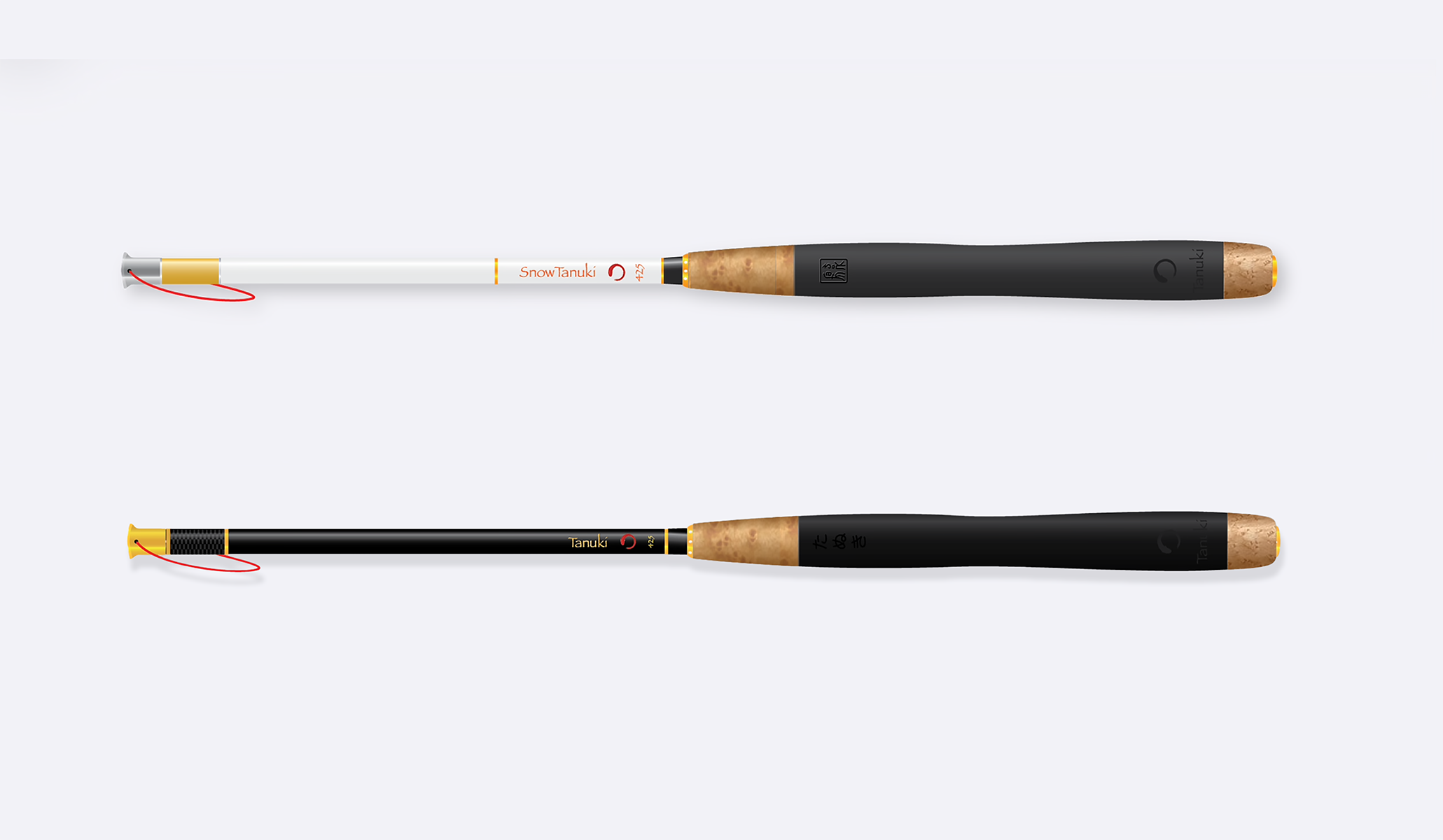
    Snow Tanuki 425 tenkara rod prototype laid out on a workbench, showing white and black rod sections and grip components during early development.
    Same blank. Different finish. Different perception.

    At Oni School in 2015, Dr. Robert Worthing, who guided me early in my tenkara journey, encouraged me to bring the Tanuki 425 prototype to life. After fishing it, Rob told me something that stayed with me. He said the rod felt like it was built specifically for his fishing style.

    When Rob described the rod as responsive, he wasn’t talking about speed or stiffness. He meant it was easy to cast with accuracy. It was easy to place the fly exactly where he wanted it, without effort or correction.

    Then he said, simply:

    “I just want it as it is—no change.”

    I took that seriously.

    I respect Rob not only as a fisherman, but as a teacher. In my mind, he is second to none as a tenkara angler and instructor outside of Japan. I relied on his experience and feel. I decided to bring a small quantity of the Tanuki 425 into production. I made no adjustments to the blank.

    The Tanuki 425 was never meant to be a mass-market rod, and it was never meant to replace the 375. It was a rod that worked as is, for a specific style of fishing.

    Surprisingly, the Tanuki 425 drew strong interest from Italy—and it still does, even more than a decade later.

    That same day at Oni School, one of the Tanuki 425 prototypes was painted white. It drew a lot of attention at Oni School in Utah. Later that year, it also caught many eyes at the Tenkara Summit in Colorado. When I asked people, “Which one do you like, and which one would you buy?” the answer was interesting: 100% liked the white, and 100% said they would buy the black.

    At the Summit, everyone preferred a cork handle. At Oni School, everyone preferred EVA. Those small differences mattered.

    So why not make a white version? But white felt too plain. I named it Snow Tanuki.

    Tanuki 425 tenkara rod grip showing black EVA handle with wooden end inserts
    The Tanuki 425 grip combines modern EVA with natural wood inserts.

    Today, the Snow Tanuki is hard to find. The first small batch of the Tanuki 425 sold out in just 30 minutes. With this, a new branch of the Tanuki story quietly began. There was a lot of debate on Facebook and at fly fishing shows: Would the white color spook fish? Does white blend with clouds in the sky? Egrets use white feathers—maybe that’s why it works.

    That discussion helps explain why the Snow Tanuki received so much attention. From a production and inventory standpoint, nevertheless, achieving a true Snow Tanuki white finish proved extremely challenging. Keeping a 100% white surface was expensive. These challenges led me to scale back the Snow Tanuki model.

    Handling a pure white finish requires extraordinary care. Dust control is critical, and every step must be kept perfectly clean. In the early days, Tanuki rods were mostly finished by hand. Even today, with improved facilities, equipment, and fewer but more experienced workers, producing a flawless white finish remains difficult.

    What remained fascinating was perception. Despite using the same blank, the white-finished rod feels lighter and softer to many anglers. Ironically, the white finish is actually heavier. It requires a multi-stage process. This includes a primer coat, paint coat, and final finishing coat. This multi-stage process is compared to the single finishing coat used on the black version. It’s a clear example of how visual cues can influence feel just as much as material reality.

    The Tanuki 425 remains, to me, the most beautiful rod over 13 feet long. It is not the longest rod. Still, it feels right. And best of all, it never needed to be changed.

    Looking back, the Tanuki 425 was a lucky shot. I wasn’t overthinking it. In other words, I didn’t spend nearly as much time developing it as I do with rods today. At that time, I didn’t understand the difficulty of designing a truly good tenkara rod. A rod longer than 12 feet presents unique challenges.

    For example, the Nissin Air Stage 380 (about 12’5”) honryu, “main river”, rod is very light. Its swing weight is low because it uses a collapsed length of more than 3.5 feet. Back then, I didn’t fully grasp what those takeoffs meant.

    The Tanuki 425 taught me that lesson quietly—through feel, not theory.

  • The Birth of the Tanuki 375: How a Simple Tenkara Rod Began

    The Birth of the Tanuki 375: How a Simple Tenkara Rod Began

    The Tanuki 375 was born at Oni School —a place that quietly reshaped how I thought about tenkara, and about myself as a rod maker. It was there that I first met Christ Stewart founder of TenkaraBum, and MD. Robert Worthing, one of the founders of  Tenkara Guides.

    When I returned home, I started looking for a name.

    Somehow, I landed on Tanuki—and it felt inevitable. My first trip to Japan was in 1980, when I stayed in Tokushima, a region known for its Awa Tanuki folklore. That image had been sitting quietly in my subconscious for decades.

    The Tanuki is a trickster in Japanese folklore—and fly anglers are tricksters too, always trying to outsmart a fish with line, fly, and presentation. Then there’s the inside joke: tanuki are famously depicted with oversized sacks—practical, humorous, and impossible to ignore. Somehow, that irreverent spirit fit the rod a little too well.

    If you’re curious about the folklore behind the tanuki, you can watch the youtube here: https://www.tofugu.com/japan/tanuki/

    Once the name settled in, the logo came next.

    My first attempt—a simple tanuki—felt charming but confusing. It didn’t immediately say fishing. I wanted something that hinted at Japanese identity without spelling it out.

    I wanted something simple. Quiet. Complete.

    The enso symbol felt right. To an angler, it reads instantly as a fish. To others, it’s a circle—unfinished, balanced, and intentional. By combining the fish with the enso, the logo became both literal and symbolic, much like the rod itself. When I put the designs up for a vote, the enso fish won easily.

    That moment marked the real beginning of the Tanuki 375—not as a product launch, but as a moment of clarity. A small idea, encouraged at the right place, at the right time.

    From there, the visual language followed naturally. A rod that felt Japanese without ever saying it was Japanese. Simple colors—black and gray, with a restrained touch of red. I studied Japanese packaging and worked toward something that felt quiet, intentional, and familiar.

    When the rods were finally completed, I contacted Chris again. I assumed he would carry them. This time, he hesitated. To protect the identity of “Japanese-made” rods, he decided not to carry the Tanuki 375. The rods were made in China, and he was concerned about long-term consistency and restocking.

    tenkara tanuki 375 rod

    I was disappointed—but not discouraged.

    I built a small online store. A friend suggested I try Facebook to spread the word. A few weeks later, the rods arrived.

    And then something unexpected happened—in the best possible way.

    The rods began to sell on their own. That early success gave me momentum and confidence to keep designing. Ideas started circling constantly. I found myself distracted at work, my mind always drifting back to rods, tapers, and materials.

    Eventually, I made a decision that felt both risky and inevitable. I devoted myself full-time to rod design—and to building a community around it, something I’ve enjoyed just as much as making the rods themselves.

    tenkara tanuki 375 rod

    Looking Ahead

    Since the Tanuki 375, I’ve learned an incredible amount about tenkara rods—materials, taper, swing weight, balance, and how subtle design choices change how a rod actually feels on the water. In the next series, I want to share those lessons. Not as marketing, but as understanding—why rods behave the way they do, and how the design process can make fishing feel simpler and more connected.

    This story marks the first step of Tanuki on a thousand-mile journey. When I think about the Tanuki 375 now, I don’t think about specs or measurements. I think about where I was, what I didn’t yet know, and how much the rod taught me in return. At the time, I couldn’t see where it would lead—and that uncertainty was part of the beauty. The journey was just beginning, like a mayfly drifting through twists and turns of the current.